John Vicalvi’s discharge notes he received two Bronze Service Arrowheads and two Bronze Battle Stars on his Asiatic-Pacific Theater Campaign Ribbon for two landings and two major battles: Bougainville and the Philippines.
B-24 ‘Liberator’ crew saved by Yugoslav partisans
Staff Sgt. Raymond Hook , radio operator on a B-24 Liberator called the “Hubba-Hubba,” and the other eight members of his crew were shot down on their sixth combat mission to destroy a German oil refinery during the final months of World War II.
His eyes kept him out of Air Force and Navy, but Army gave him a thumbs up
Lowell McCarty want to be a fly boy. “I tried to enlist in the Air Corps when I was 17. I passed the written exam with no problems, but when I took the physical exam they found out I was color blind and they told me, ‘We don’t want you!’” the 84-year-old Port Charlotte man…
Sgt. Pat Farino served 2 tours in Vietnam with ‘Screaming Eagles’
Pat Farino of Port Charlotte, Fla. went to Vietnam in 1968 with the 101st Airborne Division. He was a 22-year-old airborne trooper who served with the ‘Screaming Eagles’.
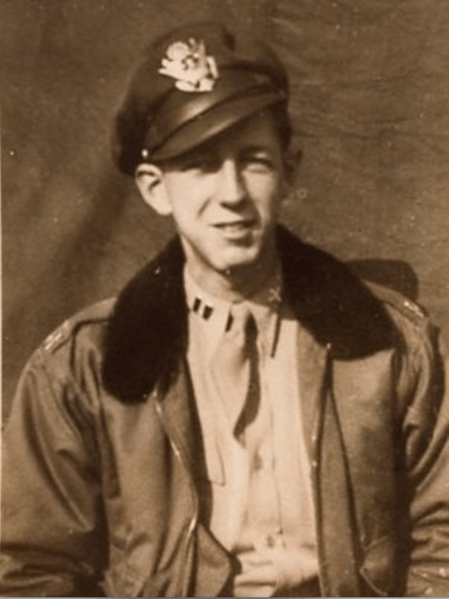
North Port Fla. man flew 35 combat missions over Nazi-occupied Europe
Bill Schultz flew from a field in Foggia, Italy, as the pilot of a B-17 “Flying Fortress” in World War II. The 87-year-old North Port, Fla. resident, who lives in the Lazy River manufactured home park, was a member of the 301st Bomb Group, 419th Bomb Squadron, 15th Air Force 65 years ago.
Warrant Officer II Charles Myers fought Army’s administrative war for 2 decades
Charles Myers was born and grew up in the Panama Canal Zone in Central America in 1933. At 21 he enlisted in the U.S. Army on May 17, 1954 under agreement between the U.S. and Panama.
Dick Holmes was a crew chief on C-47 ‘Gooney Bird’ during WW II
At 17, shortly after the Japanese bombed Pearl Harbor, Dick Holmes of North Port, Fla. tired to enlist, but his mom wouldn’t sign him into the military. The following year he was drafted and ended up joining the paratroopers.

Jim Jarvis survived sharks after sinking of USS Indianapolis in WW II
Four days after delivering the atomic bomb dropped on Hiroshima, Japan to Tinian Island in the Pacific during the final days of World War II, the USS Indianapolis was hit by two torpedoes from a Japanese sub. She sunk in 12 minutes and her demise resulted in the biggest loss of life in the U.S.…
Capt. Eugene Pentiuk received a Purple Heart at the Siegfried Line in WW II
Eugene Pentiuk joined the Michigan National Guard in 1939 on a dare from a buddy. They signed up shortly after graduating from high school in Pontiac, Mich. He and his friend trained for a year in the Louisiana wilds as members of the 32nd Infantry Division.
He flew ammo, food to Marines under siege at Khe Sanh during Vietnam War
Lt. Fred Buckingham flew his C-130 “Hercules,” four-engine transport plane to Vietnam just in time for the North Vietnamese Army’s siege of the Marine base at Khe Sanh, the biggest single battle of the war, and the enemy’s massive Tet Offensive, where every major city and many American military bases were attacked in a countrywide…
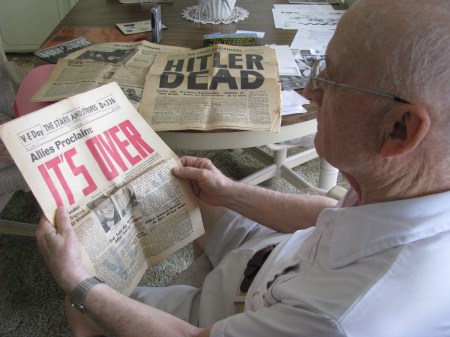
Swabbie becomes interpreter during invasion of France
Roland Petit of La Casa mobile home park in North Port, Fla. served aboard an LST (Landing Ship Tank) and ashore as an interpreter in World War II. It wasn’t easy. He had to fight his way into the Navy.
Drennon Judy served aboard Battleship Pennsylvania during WW II
Drennon Judy was a quartermaster who served aboard the Battleship USS Pennsylvania. He saw action during many of the major battles in the Pacific during World War II.
Albert Reale remembers the Okinawa typhoon most about WW II
What Albert Reale of Port Charlotte, Fla. remembers most about World War II are not the battles, but the typhoon that ravaged Okinawa during the final weeks of the war.
Venice man delivered ‘Top Secret’ messages to MacArthur, Eisenhower
The old man held a shadow box of World War II memorabilia on the couch beside him at his home on the Island of Venice. There were first lieutenant silver bars, dog tags, a picture of a serious-looking young officer, and a gold medal with a yellow ribbon and two attached bronze battle stars signifying…
‘I never flew a combat mission in my B-17, I was lucky,’ John Ross
John Ross, who until relatively recently lived in North Port, Fla. for 33 years, was the pilot of a B-17 Bomber during World War II. He and his bomber crew were members of the 388th Bomb Group, 8th Air Force flying out of a field near Cambridge, England.
B-47 bomber crews loaded with hydrogen bombs were told it was the real thing
Donald Gatrell of Port Charlotte, Fla. was a crew chief on a B-47 “Stratojet” six- engine nuclear bomber during the early 1960s. One mission stands in his mind after more than half a century.
Merchant Mariner makes 3 world trips supplying troops during WWII
Ralph Weir graduated from Kings Point, the Merchant Marine Academy, on Long Island, N.Y., during the middle of World War II. He went to sea as a cadet-midshipman aboard a liberty ship full of war supplies, the John Carroll, sailing out of San Francisco, Calif., for Australia on June 3, 1943.
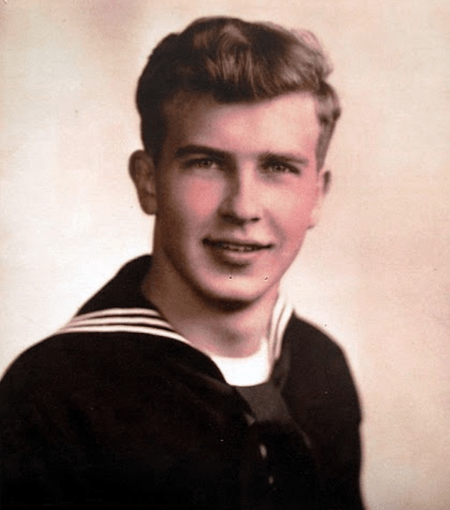
Bob Arnold spent 2 years aboard the destroyer USS Massey showing the flag
Bob Arnold became a Navy man just like his dad. His father served aboard the USS Langley, American’s first aircraft carrier, before World War II.
1st. Lt. Richard Burns almost shot down in his F-84 in Korea
1st Lt. Richard Burns almost “bought the farm” on his 95th combat mission over North Korea in his F-84 “Thunderjet.” His squadron’s objective: knock out an enemy bridge.
Resident recalls going into battle wearing a ring he made aboard ship
Warner Heinrich of Port Charlotte, Fla. was a Browning Auitomatic Rifleman who served in the 43rd Infantry Division in the Pacific during World War II. He saw action at Guadalcanal and Leyte in the Philippines.
Pfc. James Johnson protected an Atomic Bomb during war games at Ft. Polk
When James Johnson joined the 82nd Airborne Division, an elite fighting force, in the fall of 1955 as a 20-year-old soldier he took part in one of the largest ground maneuvers the Army ever staged in the United States.
Library of Congress receives 100 DVDs for ‘Veterans History Project’
For the past year, in addition to writing war stories about local veterans, I’ve provided DVD interviews of these same veterans to the Library of Congress’ “Veterans History Project.” This week I reached a milestone in these interviews. A couple of days ago I sent 25 DVDs and supporting material on each disk to the…

Pfc. Harold Snyder served in 2nd Division of Pattons’s 3rd Army in WW II
Harold Snyder was a rifleman and anti-tank gunner in the Indian Head Division, 2nd Division, in Gen. George Patton’s 3rd Army in Europe during World War II.

Dave Wade crewman in B-45, first jet bomber in America’s air defense
David Wade of Overbrook Gardens in Englewood, Fla. was a crewman aboard a B-45 four-engine jet bomber during the Korean War era. It was this country’s first jet bomber after the Second World War designed specifically for a nuclear payload. Wade returned from a tour in Korea and Japan and ended up at the Air…

Former Sgt. John Zajdlik served with the 1st Cavalry Division in Vietnam in 1968-69
John Zajdlik had a reason to dislike the Communists. He and his family escaped Communist rule when they took control of his Czechoslovakian homeland shortly after the end of World War II.
Bob Rogers was awarded 3 Purple Hearts; almost captured by VC during Vietnam War
In September 1968, on his second tour of duty in Vietnam, Spc.-5 Bob Rogers’ squad walked into a Viet Cong ambush near Chu Lai in the Que Son Valley and was almost captured by the enemy.
Sgt. Fred Strass remembers ‘Gardelegen Massacre’ at close of war
Fred Strass was a rifleman in an infantry company that fought in Europe during World War II. He served as a sergeant in K-Company, 406th Regiment of the 102nd Infantry Division.
Aviation has been the life blood of Bill Stowe’s family
Aviation for Bill Stowe’s family is a way of life. For 38 years he worked as a civilian employee for U.S. Air Force Systems Command at Wright-Patterson Air Force Base in Ohio overseeing the testing and development of some of this nation’s most important military and civilian airplanes.
His P-51 was shot down over Germany – Jack Miller spent 9 months in a German POW camp
Jack Miller loved his P-51D Mustang fighter. Twice he was shot down when he was a 20-year-old 2nd lieutenant serving as a member of the 354th Pioneer Mustang Group, 9th Air Force stationed in France during World War II.

1st Lt. Rex Anderson fought Russian MIG-15s in his F-86 over Yelu in Korea
1st Lt. Rex Anderson (Ret.) of Burnt Store Isles tangled with Russian MIG-15 fighters over the Yalu River in dogfights during the 100 combat missions he flew in an F-86 “Sabre Jet” during the Korea War. The commendation accompanying the second Air Medal he received doesn’t tell the whole story.
82nd Airborne was still an elite outfit in ’55 despite the fact there was no war
When Randy White went into the Army and eventually joined the 325th Paratroop Regiment in 1955 his unit was a far cry from the one that flew into Normandy, France in gliders on D-Day to fight the Germans.

Jerry Steimle served the country for 25 years in the Air Force and National Guard
Former Staff Sgt. Jerry Steimle of Port Charlotte, Fla. was a crew chief on an Air Force transport plane, refueling plane and helicopter who has been involved in many of the United States of America’s civilian and military adventures during the past forty years.
Col. Charles Brox spent 30 years as ‘Citizen Soldier’ and loved it
Charles Brox Jr. of Punta Gorda, Fla. was a “Citizen-Soldier” in the U.S. Army Reserves for almost 30 years. He retired a full colonel and commander of the 1209th Garrison Command, headquartered in New York State.
Lt. Col. Bill Brown flew KC-135 tankers in Alaska, Vietnam and Japan
Lt. Col. Bill Brown was flying a “Red Anchor” mission off the Russian Coast out of Thule, Greenland in his KC-135 refueling tanker when he got an emergency call on his radar scope.
Sailor fought in 4 major Pacific battles during WWII
Earl Swillum went aboard an LST as a “90-Day Wonder” third officer and sailed into the war zone at the Battle for Saipan. Before the fighting in the Pacific was over he and the LSTH-121, which also served as a hospital ship, took part in three other major battles during World War II.
Cpl. Willard Irwin was member of ‘Desert Air Force’ in North Africa in WW II
Cpl. Willard Irwin was a member of the 64th Fighter Squadron, 57th Fighter Group that provided tactical air support for British Gen. Bernard Montgomery’s 8th Army during the North African Campaign in World War II. They were known as “The Desert Air Force.”
Maj. Gen. James Andrews had his ‘Fail-Safe’ moment one day in 1977
Maj. Gen. James Andrews of Punta Gorda, Fla. graduated from the United States Air Force Academy in 1970. He spent most of his 30-plus years in the service flying Strategic Air Command tankers, commanding air wings and serving in various capacities from Deputy Assistant Secretary of Defense to Air Mobility Commander and Inspector General.
Army medic veteran remembers bell better than WWII’s ‘Battle of the Bulge’
Although he served as a private in a medical unit in Gen. George Patton’s 3rd Army, took part in the “Battle of the Bulge” and the Hurtgen Forest Campaign, two of the worst battles on the Western Front, what Andrew Napolitano of Venice, Fla. remembers most about World War II is a small bell he…
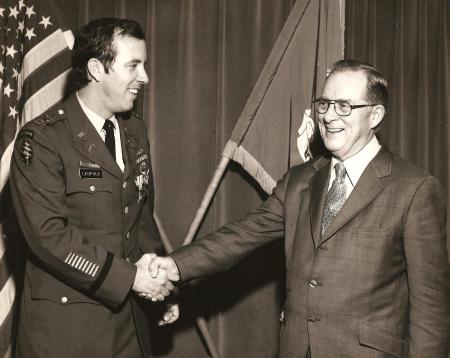
2nd Lt. Stephen Leopold was Vietnam MIA for almost 5 years before his release
POW Camp 101 is what it was called. The camp was a hell hole located 20 miles outside Hanoi, North Vietnam. It’s where 100 American MIAs languished during the Vietnam War and nobody in the United States knew they were there.

2nd Lt. Stephen Leopold was Vietnam MIA for almost 5 years before his release
It made no difference that 23-year-old 2nd Lt. Stephen Leopold was a Phi Beta Kappa from Stanford University who served as a member of the U.S. Army’s elite Special Forces in Vietnam. Three weeks after arriving in country he was captured by the North Vietnam Army near Ben Het, in the jungles of Two Corps,…
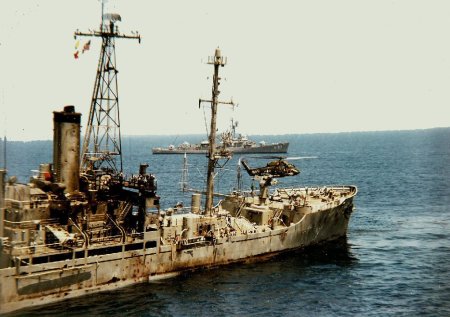
Rotonda resident survived USS Liberty attack during Israel’s ‘Six Day War’ in 1967
Mickey LeMay of Rotonda, Fla. is a survivor of the 1967 attack on the USS Liberty, an American spy ship caught up in the Arab-Israeli “Six Day War.” When the strafing, bombing and torpedoing of the converted freighter by Israeli fighter-bombers and gun boats stopped, 34 American servicemen were dead and 171 wounded.
Marjorie Morris served in Women’s Auxiliary Army Corps in WWII
Before she signed up for the Women’s Auxiliary Army Corps in World War II, Marjorie Morris , who lives North Port, Fla.’s Jockey Club, said she led a rather cloistered life.
Ed Scarff of Venice fought in two services in three wars spanning 30 years
Ed Scarff had a 30 year military career that spanned two services and three wars. He enlisted in the Navy in WWII as a teenaged machinest-mate and ended up joining the Air Force’s Aviation Cadet Program and flew jet fighters in Korea and Vietnam.
USS Arizona survivor Vernon Olsen remembered
Vernon Olsen, 91 — who survived the Japanese attack on Pearl Harbor aboard the battleship USS Arizona, swam away from the carrier USS Lexington as it was sinking during the Battle of the Coral Sea months later, and took part in the Bikini Atoll atomic bomb tests after the war — died Friday, April 22,…
He was a peacetime warrior in the 82nd Airborne in 1955
Long before he joined the 82nd Airborne Division as a peacetime warrior in the mid-1950s, Lou Drendel of Venice was fascinated with things military. It began when he was a kid and his father built balsa wood airplane models for him.
Victor Craig, former Air Force loadmaster, took part in many military adventures
Victor Craig of Harbor Heights near Port Charlotte, Fla. spent 21 years in the Air Force serving as a loadmaster. He was a sergeant in charge of loading giant cargo planes properly, flying with them to their destination and getting the planes quickly unloaded.
Bill McDermott was an APC gunner with 11th Armored Cavalry in Vietnam
Bill McDermott of Lake Suzy, east of Port Charlotte on the way to Arcadia, Fla. wound up as a 1st lieutenant in the 11th Armored Cavalry Division based in Three Corps in the northern jungle of Vietnam. He was a graduate of DePaul University and a member of the school’s ROTC program.
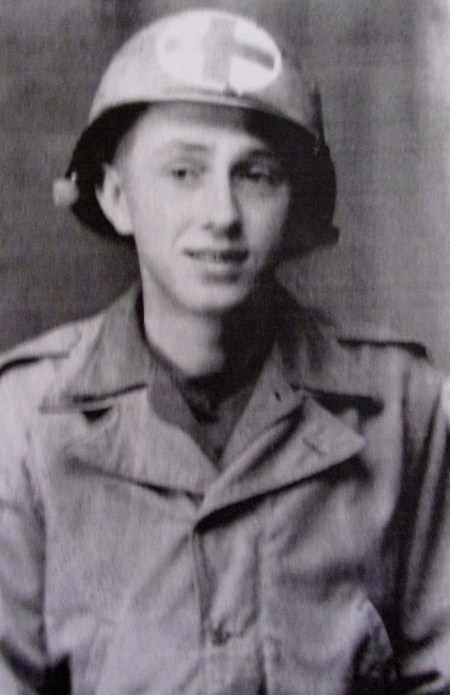
Medic Looks Back On Epic WWII Battle
Combat Medic Sgt. Larry Earle was freezing his backside off in December 59 years ago.
He fought at Okinawa the last big battle in the Pacific
Right out of high school Clyde Leininger, who lives in Alligator Mobile Home Park south of Punta Gorda, Fla. joined the Naval Aviation Cadet Program to become a pilot. Before he got his wings the program was canceled in October 1944 because the Navy had too many pilots.
Pfc. Mark Vanderveer took part in Battle of Hürtgen Forest during WW II
Mark Vanderveer only fought in one major battle during World War II, but it was a doosie. He served as a PFC in E-Company, 26th Infantry Regiment, 1st Division of the 1st Army during the Battle of the Hürtgen Forest fought along the Belgium-German border.
Old soldiers never die – Venice resident among oldest West Point grads
Col. James Oliver Stephenson of Venice, at 93, may be the oldest West Point graduate in southwest Florida.
1st Cavalryman rode to war in Huey
Jim Surber was a dogface in Company D, 6th Battalion, 1st Air Cavalry Division in Vietnam from March 1967 to March ’68. He rode to war in Huey helicopters.
Prisoner of War bracelet ‘part of my son’ says mother
The cheap, cerise-colored, aluminum bracelet on her right arm was battered and worn. Every day for the past 25 years, Vera Creed of Port Charlotte, Fla. has had it on.
‘Fuzzy’ Fazekas was Navy corpsman at Royal Victorian Hospital in ’44
When Eugene “Fuzzy” Fazekas of Spanish Lakes mobile home park in Nokomis, Fla. sailed to war as a corpsman with Naval Advance Group 56 in 1944 he hadn’t been given any medical training.
Navy nurse Millie Edsall treated sailors from D-Day Invasion during WW II
Millie Edsall was a registered nurse working in a doctor’s office in Joliet, Ill. when the Second World War erupted. At 20, in 1938, she graduated from St. Joseph’s School of Nursing in Joliet.
Seaman 1st Class Martin Warnke saw MacArthur land at Leyte during WW II
Martin Warnke of Port Charlotte, Fla. was a spotter on a 20 millimeter anti-aircraft gun aboard landing craft (LST-66) that brought troops ashore at 15 major invasion beaches in the Pacific during World War II.
He took President Roosevelt to Malta to Attend the Conference at Yalta
Angelo Marinelli is the swabbie in the center. He and his buddies had just dropped FDR off at Malta and were touring the island on a sunny Sunday. President Roosevelt met with Egyptian King Farouk aboard the USS Quincy in July 1944. Photo provided Boatswain’s mate Angelo Marinelli knew something big was up when a bathtub was brought aboard his ship, the heavy cruiser USS Quincy, in December 1944 while it was moored at the Boston Navy Yard.
Tom Gould was Navy medic with 1st Marine Division in Vietnam
Looking back on it all, Tom Gould of Venice says, “I was 17 and just out of high school. I was a rebel without a cause. My father told me I had three choices: ‘I could get a job, go in the service or go to reform school.’

The little book that gave American GIs their first taste of England during WW II
Getting it right: This little book was given to all American GIs who set foot on English soil during the Second World War. Its purpose: To teach them British customs in a hurry.
Art Nicholas and family on beaches at Normandy on 65th Anniversary of invasion
His dark blue ball cap with the orange patch and gold lettering read: “SCOUTS AND RAIDERS, 1942-1945, U.S. NAVY WW II, WE LEAD THE WAY.” It was what Art Nicholas of Englewood, Fla. wore when he, his wife and two grown daughters visited all five beaches in Normandy, France on the 65th Anniversary of the D-Day Invasion during the summer of 2009.
Bill Lutgen got 3 Distinguished Flying Crosses in Vietnam flying A-37 fighter
Bill Lutgen of Venice, Fla. flew 378 combat missions in an A-37 fighter-bomber in Vietnam, received three Distinguish Flying Crosses and 19 Air Medals for his efforts and retired from the Air Force after 20 years in the service.
Old Soldier went back for her
A VFW chaplain said a few words, two soldiers in dress uniforms folded an American flag into a precise triangle and handed it gently to the widow, a rifle squad fired three volleys and Taps was played as 50 mourners bowed their heads.
South Pacific romance – Love letters sustain WWII couple
His story could have been a page out of “South Pacific,” Rodgers and Hammerstein’s hit musical set in the Solomon Islands during World War II.
Bob Bolling served aboard USS Salerno Bay, an escort carrier, after WW II
Bob Bolling missed World War II altogether. He signed up for the navy in 1946 right out of high school. After boot camp in Bainbridge, Md. he went aboard the escort carrier USS Salerno Bay, CVE-110, in Norfolk, Va.
Pete Self fought in Italy with 5th, France with 7th, Germany with 3rd Division
Pete Self of Englewood was a rifleman in H-Company, 143rd Regiment of the 36 Infantry Division when he first came ashore at Naples, Italy on Sept. 9, 1943 during World War II.
Ken Armstrong served in British Royal Marines 22 years during ‘Cold War’
Ken Armstrong was a command sergeant major in the British Royal Marines when he retired from Her Majesty’s service after 22 years. He joined the “Bootnecks”–Marines– in Glasgow, Scotland shortly after graduating from high school in 1947.
Kil Kilcauley fought in 3 wars: WW II, Korea, Vietnam during 25 year career
Kil Kilcauley of North Port has seen a lot of life in his 97 years of living. He’s fought in three of this country’s wars–World War II, Korea and Vietnam–and lived to tell about it.
Sgt. Richard Smith provided life blood for fighting World War II
Richard Smith of Port Charlotte, Fla. served in the 500th Port Battalion, an all black unit in World War II, that kept front line troops supplied with ammunition and equipment.
Sgt. Harold Glover fought at Salerno, Anzio, Monte Cassino, France & Germany during WW II
Harold Glover of La Casa mobile home park in North Port, Fla. was a sergeant in the “Fighting 36th Infantry Division” that first saw battle in North Africa in World War II, went on to Italy and before the war was over made the invasion of Southern France and marched into Germany. He received three Purple Hearts while fighting at Salerno, Anzio, Monte Casino and finally crossed the Rhine River into Germany at war’s end.
Glasgow girl recalls the Luftwaffe bombing city during city during WW II
Jean Cole was an 11-year-old Scottish school girl when the Germans marched into Poland in September 1939 starting World War II. She lived in a Glasgow tenement with her parents, twin sister and little brother.
He survived Battle of Ripcord with 101st Airborne in Vietnam
Dale Tauer of Punta Gorda, Fla. was a member of the 1st. Battalion, 506th Regiment, 101st Airborne Division–The Screaming Eagles. In July 1970 he fought on a hill top in The Battle of Ripcord, the last major battle involving Americans in Vietnam’s A-Shau Valley against the 324th Division of the North Vietnamese Army.
Floyd Cole flew 30 combat missions over German territory piloting a B-17
Floyd Cole piloted a B-17 bomber on 30 combat missions over Nazi-occupied Europe during World War II. He was a member of the 452nd Bomb Group, 8th Air Force that flew from a field near Norwich, England.
Cpl. Robert Stilson of Alameda Isles, Englewood fought on Iwo Jima 19 Feb. 1945
Robert Stilson of Alameda Isles Mobile Home Park in Englewood, Fla. was a 19-year-old Marine Corps corporal who charged ashore from a Higgins Boat onto the black sandy beach at Iwo Jima on the first first day in the second wave –Feb. 19, 1945– to play his part in one of the major battles in the Pacific during the closing months of World War II.
Thomas McLean arrived at Okinawa aboard USS Tollberg near end of WW II
Electrician’s Mate 1st Class Thomas McLean’s war in the Pacific lasted a little over three months. He sailed aboard the USS Tollberg, APD-103, for Pearl Harbor arriving April 22, 1945.

Iwo Jima photographed by Lou Lowery a Marine photographer 60 years ago
Dick Honyak walked into the Charlotte Sun newspaper office in Englewood, Fla. six years ago and dropped a big, thick, loose leaf notebook full of 8 by 10 black and white photographs on my desk. The historic photos were of the Marines taking Iwo Jima from the Japanese at the close of World War II.
Petty Officer Jerry Hemphill first to intercept Japanese surrender
Jerry Hemphill served aboard the USS Missouri as a Japanese intercept operator. He was the first American to intercept the official code from Tokyo that the emperor was calling it quits. World War II was almost over.
2nd Infantry trooper went to Korea a month after war declared
Alex Magno was a 17-year-old Italian boy from Chicago who joined the Army and ended up in L-Company, 3rd Battalion, 23rd Infantry Regiment, 2nd Infantry Division in Korea a month after the Korean War broke out in June 1950.
Pfc. Billie Hopkins received 3 Purple Hearts fighting in Europe during WW II
Billie Hopkins, who winters at Little Charlie Creek mobile home park in Wauchula, was only 5-feet, 3-inches tall and weighed 112 pounds. His size made him a perfect candidate to be a ball turret gunner on a B-17 or B-24 bomber in World War II. But the Air Corps didn’t want him because he was…
He twice crashed in B-24s and shot down 2 German fighter planes
Former Staff Sgt. Charlie Collins of Brookside Bluff mobile home park north of Arcadia was a member of “The Cottontails.” He flew as nose gunner in a B-24 “Liberator” four-engine bomber during World War II. His bomb group had cotton bulbs painted on their tails, thus the “Cottontails” moniker.
Lt. Col. John Murphy received 2 DFCs in Vietnam flying choppers and spotter planes
John Thomas Murphy was a Marine pilot who flew helicopters and observation planes in Vietnam during his two combat tours. He received a Distinguished Flying Cross on each deployment while piloting an H-34 helicopter and a OV-10 Bronco twin-engine spotter plane into withering North Vietnam Army fire.
Marine loses two yellow tractors in the Aleutian Islands fighting the Cold War
Fred Holzweiss of Englewood, Fla. was a first lieutenant in the 1st Engineering Battalion attached to the 1st Marine Division in Korea in 1953.
Ensign Jim McKinney forced Soviet sub to surface with water hose in Sea of Japan
Jim McKinney is a Navy man. So was his father and so is his son. Jim was a career naval officer who served during the Cold War as a commodore of a squadron of hydrofoil boats in Key West equipped with Harpoon, ship-to-ship guided missiles. His father, Adm. Eugene McKinney, was skipper of two World War II submarines: the USS Salmon and the USS Skate. He received three Navy Crosses and a Silver Star for Valor for the combat missions he made. Brad, Jim’s oldest son, is the commander of the Explosive Ordinance Department at the Navy’s facility at Panama Beach.
‘Cold War’ warrior returns home after fighting dictators, drug runners south of border
Former 1st Sgt. Ken Drew was a “Cold War” warrior. He spent most of his 23 years in the Army as a Spanish-speaking, military intelligence expert who served 14 of those years fighting South and Central American dictators and drug lords. Toward the end of his service he did a hitch in Iraq during the height of “The Surge,” interrogating high profile Iraqi detainees.
Bernie Harris made 40 trips across Atlantic, Pacific in WW II as Merchant Mariner
Bernie Harris of Loveland Courtyard condominium in Port Charlotte, Fla. made 40 trips across the Atlantic and Pacific during World War II sailing in Esso tankers bringing aviation gasoline and fuel oil to the troops. After the war he joined the Navy and served four years as a submariner aboard the USS Trout—SS-566.
Lt. Leslie Nielsen ditched his B-17 in English Channel on 28th combat mission
It was June 20, 1944 and 1st Lt. Leslie Nielsen was on his 28th combat mission over Nazi occupied Europe during World War II with only two more missions to fly. Their target: an oil refinery in Hamburg, Germany.
Jim King and his buddy, Charley, found out about life before serving in Vietnam
Jim King and his buddy, Charley Carr, joined the Army right out of high school. The two 18-year-old California boys got an education about life long before they reached Vietnam and faced the enemy.
Pvt. Andy Ellul of Emerald Point fought as mortarman during Korean War
Andy Ellul of Emerald Point condos in Punta Gorda, Fla. arrived in this country from the island of Malta on Christmas Eve 1950 as a 21-year-old immigrant. He went to work for the Ford Motor Co. in Detroit. Two years later he found himself serving as a private in the 461st Heavy Mortar Battalion holding a defensive line along a river near the 38th Parallel that would separate North and South Korea.
He served aboard the Edmund Fitzgerald shortly before doomed ore boat sank
The Wreck of the Edmund Fitzgerald was more than a popular ballad made famous by Gordon Lightfoot more than three decades ago. It was a way of life for Frank Stelzer who served as second engineer aboard the doomed ore freighter six months before she went down with all hands in a monster storm on Lake Superior Nov. 10, 1975 with 26,000 tons of iron pellets.
1St. Sgt. Jim Tankersley of Brookside Bluff fought with Patton, Bradley in Europe
1st Sgt. Jim Tankersley, who lives in Brookside Bluff Condominium Park north of Arcadia, Fla. was in charge of ground communications for the 95th Infantry Division’s artillery battalion. He and a squad of 25 soldiers laid and maintained the phone cables connecting division headquarters with front line troops during some of the major battles in Europe in World War II.
Vern Nelson served aboard PT-108 in the S.W. Pacific during World War II
By the time Radioman 2nd/Class Vern Nelson came aboard PT-108 in the South Pacific in 1944 the torpedo boat had seen lots of action against the Japanese in World War II. As part of Motor Torpedo Boat Squadron FIVE the 80-foot plywood craft first operated out of the Panama Canal Zone starting in July starting in 1942.
Jim Broom found out being a truck driver in Vietnam could be deadly
Jim Broom of Edgewater Manor, Port Charlotte, Fla. was no war hero. He was just a Specialist-5th class who drove a five-ton dump truck and got shot at by the enemy in Vietnam in 1967-68 while serving with the 815th Engineer Battalion for 11 months and 15 days.
He spent 39 months at sea on a Coast Guard cutter off Greenland during WW II
Although Russell Clark was a strapping 6-foot, 2 ½-inches tall, 210 pounds and physically fit, the Marines wouldn’t have him; neither would the Navy or the Coast Guard. The reason: the 21-year-old was married with a child on the way.
Chopper pilot Bruce Owens on USS Kearsarge when Schirra plucked from Pacific
Bruce Owens of Burnt Store Marina was a lieutenant j.g. serving aboard the aircraft carrier USS Kearsarge (CVS-33) that plucked Astronaut Wally Schirra from the Pacific on Oct. 3, 1962 during America’s fifth manned space flight.
Charlie Parsons joined Coast Guard because he loved sea and ships
By the time Charlie Parsons joined the Coast Guard in 1956 he had already served two years in the Marine Corps Reserve, starting in 1953 while still in high school in Saugus, Mass.

Port Charlotte man haunted by Vietnam memories
Bill Schwartz was a “River Rat.” He was a brown water sailor who skippered a PBR patrol boat in the Mekong Delta area of South Vietnam in 1968 during the Vietnam War.
He served aboard destroyer, USS Hudson, off Iwo Jima and Okinawa in WW II
Electronics Technician 2nd Class Richard Berry of Venice served aboard the USS Hudson (DD-470), on picket duty off Iwo Jima and Okinawa during the closing months of World War II.
Joe Pendrak sank German sub with ‘Flying Boat’
Joe Pendrak spent his time flying a twin-engine Martin Mariner PBM Seaplane on submarine patrols and convoy duty in the Atlantic and Caribbean during World War II. His squadron, V P-215, was assigned to Bermuda part of the time.
USS Torsk, only sub to sink train in World War II
Don Lichty of Lemon Bay Isles mobile home park in Englewood was a torpedoman aboard the USS Torsk in World War II. Her claim to fame was she was the only submarine in the U.S. Navy to sink a train. She also sent the last two Japanese ships to bottom hours before the end of the Second World War.
Tim Bryant, a ‘Mosquito’ who served in the Air Force during Korean War
Tim Bryant was a Mosquito. During the Korean War he served as a forward observer for the Air Force. He called in air strikes on the enemy with the help of a pilot in a World War II single-engine, two-seat T-6 training plane and a radio.
Venice man survived B-17 crash, German POW camp during WWII
It was supposed to be a “milk run.” The crew of “Angel in Di-Skies,” a B-17 flying as part of the 8th Air Force from a base in Framlington, England, during World War II, was sent on a low-level mission to knock out a railroad bridge near Jussy, France.

2nd Lt. Carl Citron flew 33 missions in 8th Air Force
2nd Lt. Carl Citron hadn’t been in England but a few weeks when his unit, the 466th Bomb Group, 786 Squadron, of the 8th Air Force, was assigned to a low-level bombing mission in their B-24 Liberators against the German submarine pens at Brest along the coast of Nazi-occupied France.
‘Doc’ Schaeferle of La Casa survived Omaha Beach on D-Day
The citation accompanying his Bronze Star Medal reads: “LAWRENCE G. SCHAEFERLE, CAPTAIN, Medical Detachment, 32nd Field Artillery Battalion. For heroic achievement in connection with military operations against the enemy in the vicinity of St. Laurent-sur-Mer, Normandy, France, 6 June, 1944. Although subjected to heavy enemy fire, Capt. Schaeferle remained on exposed beach, administering first aid and assisting in evacuation of the seriously wounded. His heroic devotion to duty saved many lives. Entitled to wear six bronze battle participation stars on European Theatre Ribbon for campaigns in Sicily, Normandy, Northern France, Rhineland, Ardennes, and Central Europe. Awarded the Bronze Star Medal…
Joe Taylor – Black Marine served 3 tours in Vietnam with 4th Marine Division
Joe Taylor was a black Marine who served three tours of duty in Vietnam. The death and devastation this grunt witnessed while serving in the Corps over there was almost too much for him to bear.
Master Sgt. George Hire watched first Japanese bomb hit dry dock at Pearl Harbor
When the Japanese bombed Pearl Harbor shortly before 8 a.m., Dec. 7, 1941 George Hire was a Marine recovering from coral poisoning at the Naval Hospital. He was looking out the window while washing dishes and saw the first bomb hit the dry dock 100 yards from where he was standing.
Pfc. Bob Tidwell served with the 10th Mountain Division in Italy during WW II
The British tried it, the Canadians tried it and elements of the 5th U.S. Army gave it a shot to no avail. Now it was the American 10th Mountain Division’s turn to take on German Gen. Fridolin von Senger’s entrenched troops in the Apennines Mountains of Italy during the winter of 1944.
Chance encounter with Kamikaze pilot changed Col. Gilchrist’s life
U.S. Air Force Lt. Col. Doug Gilchrist was waiting at the airport terminal in Tokyo in 1967 for a flight that would take him to the war in Vietnam when a chance encounter with a Japanese couple changed his life.
Lt. Col. Doug Gilchrist flew a C-130 over N. Vietnam with MIG fighters on their way
Lt. Col. Doug Gilchrist was flying a four-engine C-130 Hercules cargo plane, used as a command ship, from a base in Thailand over North Vietnam when he came as close to “buying the farm” as he did during any of his 102 combat missions over enemy territory during the Vietnam War.
Col. Carl Citron takes last flight on WW II B-24 bomber
Col. Carl Citron (Ret.) took a sentimental journey last Thursday morning at Venice , Fla. Municipal Airport on a B-24 “Liberator” bomber like the one he piloted a lifetime ago on 33 combat missions over Nazi occupied Europe in World War II. He was in ecstasy during the 30 minute flight down memory lane as the four-engine heavy bomber circled Venice a 1,000 feet below.
WW II shipmates aboard USS St. Mary’s meet in Punta Gorda after 65 years
The headline on the story in the Sun read: ‘Jack Callahan served aboard USS St. Mary’s at Okinawa.’ Rudy Ricci of Windmill Village mobile home park in Punta Gorda, Fla. couldn’t believe his eyes.
Rudy Ricci cut USS St. Mary’s anchor chain and saved ship during WW II
World War II was over. The Japanese had signed the surrender aboard the Battleship Missouri in Tokyo Bay a few weeks earlier when Shipfitter 2nd-Class Rudy Ricci of Windmill Village, Punta Gorda, Fla. stepped into the limelight. He served aboard the USS St. Mary’s off Okinawa Island during a typhoon in Buckner Bay that nearly…
Leonard Hieber led armada – flew over Japanese surrender in Tokyo Bay
When the Japanese surrendered abroad the Battleship Missouri on Sept. 2, 1945 America’s airborne military might was on display. An armada of U.S. fighters and bombers flew low and slow over the “Mighty Mo” to hammer home to the Japanese they had been vanquished.
President Clinton gives MSgt. Fred Burger a sendoff with a plaque and a note
It’s not every master sergeant who retires from the Air Force after 37 years who receives a Meritorious Service Award from the President of the United States or a personal note on White House stationery signed by the President.
Tony Inzerillo made one combat mission aboard USS Thornback in WW II
Tony Inzerillo of Seminole Lakes subdivision, south of Punta Gorda, Fla. almost missed World War II. He and the rest of the crew of the submarine USS Thornback, SS-418, made one combat cruise off the coast of mainland Japan a month before the Japanese unconditionally surrendered ending the Second World War.
Ed Bremen wounded on Saipan in WW II fighting with 4th Marine Division
Ed Bremen was a Marine sharpshooter in Company F, 2nd Battalion, 24th Regiment, 4th Marine Division. He became a Browning Automatic Weapon man who saw action in the Pacific on Roi and Namur islands near Kwajalein Atoll in February 1944 and Saipan in the Mariana Island chain in June, 1944. He was wounded there and spent the next 16 months recuperating in a trio of hospitals throughout the country.
Float plane pilot from USS South Dakota plucked 2 downed pilots out of the sea
It was Jan. 22, 1945 and Americans forces were already making air strikes on Okinawa. The captain of the battleship USS South Dakota got word a carrier plane had crashed into the sea off the Pacific island.
Second teak box from USS Arizona’s deck shows up in Port Charlotte
For as long as Kathy Vanden Bosch of Port Charlotte can remember, the little teak wood box has been a prized possession. What made it really special is it sat on her father’s dresser until he died. She was told as a child, it was made from the deck of the battleship USS Arizona by her uncle when he was in the service at Pearl Harbor during World War II.

Lt. Barber’s B-24 bomber shot down over Vienna; he became POW
Disaster struck on Friday, October 13, 1944 for 2nd Lt. Victor Barber a 21-year-old bombardier aboard a B-24 “Liberator” four-engine bomber flying from a base in Foggia, Italy. He was a member of the 251st Bomb Group, 724th Squadron, 15th Air Force.
He served aboard light cruiser, USS Phoenix, during Pearl Harbor attack
“We were anchored at Pearl about 1,000 feet from Battleship Row when the Japs attacked,” the 85-year-old former sailor recalled. “We got underway in 17 minutes, but our path to the open sea was blocked by the battleship West Virginia that had been torpedoed and run up on a shoal to keep from sinking.”
Ted Bobbin joined the Royal Observer Corps at 14 at start of WW II
When the Germans marched into Poland in September 1939 starting World War II, Ted Bobbin of Punta Gorda Isles, Fla. was a 14-year-old English high school student. He wanted to do his part for the war effort so he joined the Royal Observer Corps.

His job was to deliver a nuclear strike with his F-105 ‘Thunderchief’ fighter
Lt. Chuck Hofelich was a “Thud” driver and proud of it. He flew an F-105 “Thunderchief” supersonic fighter-bomber, he and his jet jockey buddies called “Thuds” on 79 combat missions over North Vietnam.
Marine turned part of USS Arizona’s teak deck into jewelry box
John Henry Thomas was a Marine who served in the Pacific during World War II, but never fired a shot in battle. He was a carpenter before the war who worked in the woodworking shop at the Marine Corps barracks in Pearl Harbor almost a year after the Japanese bombed the Pacific Fleet at Pearl dragging the United States into war.
Hitler waved to her from an open limousine on his way to Paris
When Diane Oldmixon of Rolls Landing in Charlotte Harbor, Fla.was 12 she and her girlfriend helped the French Underground fight the Germans who invaded their country during World War II.
He landed at Utah Beach on D-Day in his M-7 self-propelled gun
Ed Kent was the gunner on an M-7, self-propelled 105 millimeter Howitzer, who landed June 6, 1944 at Utah Beach on D-Day in Normandy, France during World War II. The 20-year-old corporal survived 15 days before being seriously injured by shrapnel from incoming enemy fire, was sent back to England and eventually the States to recuperate.
Julius Hirsch fought Japanese in the Aleutians and finally in Okinawa at war’s end
Julius Hirsch grew up in the Bronx and went to war almost a year before the Japanese bombed Pearl Harbor. He was a member of the 862nd Antiaircraft Artillery Battalion sent to the Aleutians when the Japanese invaded the barren islands off the Alaskan coast in 1942.
Marine survives near fatal wound from VC machine-gun in Vietnam
“Echo Company, 2nd Battalion, 5th Marine Regiment, 1st Marine Division was a black flag outfit. We were a skull and crossbones unit comprised of assault hunter-killer teams. We took no prisoners,” Charles Shaughnessy, who saw considerable action in 1968 in Vietnam as a 20-year-old Marine corporal and squad leader, said.
John Krusinski Sr. manned quad .50s on the DMZ in Vietnam
John Krusinski, Sr. was a 19-year-old draftee who grew up in the Chicago area and went to war in Vietnam in 1967. He was a member of the Army’s 1st Battalion, 44th Artillery, G-Battery station at a base camp in Dong Ha, along the DMZ separating North and South Vietnam. He spent a year being shot at or shooting at other people.
He served with 82nd Airborne and 25th Infantry Division in Vietnam War
Charlie Householder served in Vietnam in 1969 as a Platoon Sergeant. with the 82nd Airborne Division at first and end up in the 25th Infantry Division in ‘Nam. He retired a decade later as a 1st Sergeant with the 82nd at Fort Bragg, N.C.
Flight Nurse Joann Bolitho brought wounded troops home from Vietnam
Lt. Col. Joann Bolitho was a flight nurse who served in Vietnam and spent the rest of her 20-year military career in hospitals in Europe, Alaska and around the country.
Sgt. Willard Chamberlin with 1st Marine Division at Okinawa during WW II
Willard Chamberlin was a Marine mess sergeant and rifleman who saw action at Okinawa, the biggest battle in the Pacific during the closing days of World War II. He quit high school in 1943, when he was just 17-year-old, and joined the Marines with his parents’ permission. Before the war was over he had three brothers who also served in the Army, Navy and Air Corps.
Aviation Cadet Charles Grizzaffi wanted to fly P-47 ‘Thunderbolts’ in WW II
Aviation Cadet Charles Grizzaffi wanted to fly a “Thunderbolt” fighter plane in World War II. He wanted to be a P-47 pilot, but the war was over before he got his wings.
Assault on Assoro
The ancient hill town in central Sicily is topped by the ruins of King Robert II of Normandy’s 12th Century castle. It’s been a stronghold of armies and warlords since 1000 B.C. In July 1943 the village, the castle and the hill with its 1,100-foot cliff was held by the German’s elite Herman Goering Division during the Allied Sicilian Campaign in World War II.
Last thing he remembers is bomb exploding near USS Claxton during WW II
Long before the Kamikaze attack during the Battle of Leyte Gulf, off Luzon in the Philippine Islands during World War II, the USS Claxton with George Bothum aboard saw considerable action in the Solomon Islands off Guadalcanal, Bougainville and Tillage earlier in the war.
Rene Camps kept ‘Bird Dog’ spotter plane in the air during Vietnam War
Rene Camps was an aircraft mechanic who kept a Cessna 0-1 Bird Dog forward air control spotter plane in the air during the Vietnam War. He graduated from high school in Miami in 1964 and served two tours in ‘Nam as a member of the 21st Tactical Air Support Squadron from 1967 to ’69.
Jack Potter took an LCM landing craft ashore at Inchon in Korea
Most of the time during the Korean War Jack Potter served as a coxswain aboard a LCM (landing craft) attached to the attack transport USS Andromeda (AKA-15). He made the second landing at Inchon, South Korea and brought Marines ashore in the first wave.
USS Collett, DD-730, first American ship in Tokyo Bay day Japanese surrendered
There’s not much Nick Gassera remembers about serving as a seaman aboard the destroyer USS Collett, DD-730, during World War II. But three images still vividly stick out in his mind about World War II after more than six decades—Okinawa, the typhoon and being aboard the first American ship to sail into Tokyo Bay when the Japanese surrendered.
Soldier tells about looting Hitler’s Eagle’s Nest in his own words
Fred Butts, a Cape Cod industrialist who wintered in Boca Grande, Florida, was thought to be the first American soldier to loot Adolf Hitler’s Eagle’s Nest retreat high atop Kehlstein Mountain in the Bavarian Alps near Berchtesgaden at the close of World War II. Sixty years later, shortly before his death, he told his family…
Hitler’s smashed living room window at Alps retreat hits home with local man
Mark Futch knew all about the smashed pictured window in the living room of Hitler’s Berchtesgaden retreat in the Bavarian Alps mentioned in a recent war story that appeared in the Sun.
Trapped in the ball turret of his B-17 bomber over Germany he almost died
A family tradition Bob Burling’s father, Samuel, served as a motorcycle dispatch driver on the front lines in Europe during World War I. Bob served two years, four months and 10 days as part of a B-17 bomber crew in World War II, and his son, Robert, served with the 1st Cavalry in Vietnam.
274th Field Artillery Battalion was part of Patton’s 3rd Army in WW II
Ralph Coffin fought all across Europe during World War II with the 274th Armored Artillery Battalion, part of Gen. George S. Patton’s 3rd Army. He landed in Normandy on Aug. 19, 1944 at St. Mere L’Eglise and fought from there to Avaranches and on to the Muese River by Sept. 1 and then to the famed fort at Verdun held by the Germans.
WW II for Hank Chiminello was short and sweet
World War II for Hank Chiminello only lasted four months. He ended up in Honolulu as a radioman aboard a troop transport ship in April 1945. “We were taking boys and supplies over to the islands on a 426-foot ship, the USS Medean (AKA-31),” the 88-year-old North Port resident explained. “We were sent to all the islands over there – the Philippines, Guam, Saipan, Iwo Jima and Okinawa.”
Japanese machine-gunners were waiting for ramp on landing craft to drop!
When Cpl. Kermitt Hampton’s landing craft hit the beach on New Britain Island in the South Pacific during World War II the Japanese knew they were coming and had a deadly trap waiting on the beach for the American forces.
Gerald Kelly was an advisor to President Somoza during the Iran Contra Affair
When Gerald Kelly went to war in Vietnam in 1968 he was a young Army 1st. lieutenant with little or no experience. By the time he retired from the service two decades later he was a light colonel, Latin American expert, Green Beret and an Airborne Ranger who served in Special Forces in the Americas.
Dave Schmidt joined Navy at 15 and took FDR to Yalta aboard Quincy
Dave Schmidt joined the Navy at 15, before World War II. He was a big boy for his age – 5-ft., 6-inches tall and 215-pounds. “I was an out of control kid. My parents both worked and they decided the Navy was the best thing to straighten me out. They told the Navy recruiter my birth certificate was lost in a fire and I was 17-years-old,” the 86-year-old Port Charlotte man recalled almost seven decades later.
Al Gosselin was radioman who served aboard freighters in WW II
At 90 Al Gosselin of Big Tree mobile home park in Arcadia, Fla. no longer remembers all the details of the 10 trips he made across the Atlantic and Pacific as a radioman aboard six freighters and one landing craft he served on during World War II. But there are instances aboard ship he still recalls as clear as a bell.
Sgt. Tom Miller fought the North Koreans to a standstill on Arrowhead Ridge in ‘52
In Korea Sgt. Tom Miller was a forward artillery observer. It was a risky job because his observation outpost sat on the tallest hill in the area for all the world to see.
He served aboard USS Harding at Normandy and Okinawa in WW II
Mike Stata was a “hot shell man” on a 5-inch gun aboard the destroyer USS Harding 1500 yards off Omaha Beach on June 6, 1944 during the Normandy Invasion. He also served aboard the Harding off Okinawa on April 16, 1945 when his ship was hit by a kamikaze and 22 sailors aboard the destroyer were killed.
Port Charlotte man kept Navy planes flying in Pacific during WWII
Herb Wild of Port Charlotte, Fla. joined the Navy in 1942 during World War II as an 18 –year-old electronics assistant’s mate. His job was to repair the newfangled electronic equipment on airplanes flown by Navy pilots in the Pacific Theatre of Operations.
He went over the side in the ‘buff’ when his ship was torpedoed in WW II
When Boatswain’s Mate 2nd Class Diamond Trifilo went over the side of the USS Eversole, a destroyer escort, after she was struck by two Japanese torpedoes during the Battle of Leyte in World War II he was wearing nothing but his boatswain’s whistle on a chain around his neck.
At 75 George Speidell is still a Navy man
George Speidell was a “Snipe” aboard the USS Cushing, DD-797, during the Korean War. He worked as a throttle-man in the aft engine room on the Fletcher Class destroyer. “I was 17 and a disenchanted junior in high school when I convinced my father and mother to let me joint the Navy in 1952,” the former 75-year-old Port Charlotte, Fla. sailor explained. “My grandfather and great-grandfather had been in the Navy and that’s where I wanted to be.”
WACs were considered 2nd rate soldiers by some men, Ruth Russell said
When Ruth Russell of Charlotte Ratchets, south of Punta Gorda, joined the Army in 1973 it was still known as the Women’s Army Corps. In short, the WACs.
Combat engineer in Vietnam recalls the lighter moments in war
Gordon Quick, who lives off Burnt Store Road south of Punta Gorda, Fla. near the county line, served in the 588th Combat Engineer Battalion in Vietnam in 1965-1966. His unit was under command control of the 1st Infantry Division—the “Big Red 1” with division headquarters and the support command located at Tây Ninh.
John Arens served in the Merchant Marines, Rangers and Navy
John Arens served as a teenage Merchant Mariner in World War II, become an Airborne Ranger in the Korean War, graduated from diving school in the 1960s, spent 11 years as a Navy SCUBA diver in the Arctic before skippering a Navy spy ship during the Cold War and completed his 40-year military career as the captain of a fast transport ship during “Operation Desert Storm” in 1991.
Sgt. Ed Erving drove an ambulance in 5th Armored Division during WW II
He landed on Utah Beach on D-Day plus 6, took part in the breakout at St. Lo, the Battle of the Bulge, Hürtgen Forest, Remagen and stopped at the Elbe River near Berlin at war’s end. Edwin Erving of Port Charlotte, Fla. was trained as an ambulance driver and medic attached to the 5th Armored Division in World War II. He landed at Utah Beach in Normandy, France on D-Day plus 6 with the 5th Armored.
Pfc. George Sheldon’s unit took Gen. MacArthur ashore at Leyte in WWII
A year after the Japanese bombed Pearl Harbor, dragging the United States into World War II, George Sheldon, who grew up in Haverhill, Mass., joined the Army and eventually ended up in an amphibious brigade.
WW II Navajo Code Talker visits area, talks to several local groups
Bill Toledo, a Navajo Code Talker with the 3rd Marine Division in World War II, was in the area talking to several organizations and school groups, along with Frank Willetton, another Navajo who fought with the 2nd Marine Division at Okinawa. The Rotary Club of Englewood, Fla. brought them to town to speak at their 7 a.m. weekly meeting Thursday, March 25, 2010. While here they also talked to the general public at a two hour session held at Lemon Bay High School in Englewood on Thursday evening. A full house of 1st Marine Division Assn. member listened to the…
Master Chief recalls his part in Cuban Missile Crisis of 1962
Joe Rex joined the U.S. Navy at 17 in February 1945 near the end of World War II. In 1970, twenty-five years later, he retired as a Master Chief Petty Officer. Although he was in the service during the Second World War, he served aboard the destroyer, USS Mole –DD-693—at the start of the Korean War and served as a Mobile Electronic Technician near then end of his quarter century in the Navy, Rex’s finest hour may have been during the Cuban Missile Crisis of 1962.
Ken Schank was way below deck when 3 torpedoes hit his cruiser USS Helena
A spread of three “Long Lance” Japanese torpedoes struck the light cruiser USS Helena at 2 a.m., July 6, 1943 off Vella Lavella Island, part of the Solomon Island Chain in the South Pacific. Machinist Mate Ken Schank of Port Charlotte was at his battle station maintaining an electric generator controlling the cruiser’s main guns in the bowels of the ship deep below the surface when disaster struck.
Harvey Rapp kept America’s biggest bomber flying
Harvey Rapp’s job was to keep the biggest bomber this nation ever built in the air. The B-36 was an eight-engine Goliath that could fly non-stop from anywhere in the United States to Europe drop its bombs and return without refueling.
Brig. Gen. Neil Kennedy provided flying gas station in Vietnam and for SAC
Capt. Neil Kennedy flew a KC-135 jet tanker in Vietnam War and continued to pilot the same flying gas station for the Strategic Air Command after the Southeast Asian war. He retired in 1991 as a brigadier general after 32 years of service in the U.S. Air Force and the Air Force National Guard and moved to Calusa Lakes subdivision in Nokomis, Fla.
Alex Brast flew a B-26, twin-engine ‘Widowmaker” in WW II and survived
Alex Brast of Blue Heron Pines mobile home park, south of Punta Gorda, flew a B-26, twin-engine bomber in North Africa, Sicily, Sardinia and Italy during World War II. These bombers were called “The Widowmaker.” Because the planes were hard to land, particularly with one engine out, a lot of airmen died when the hot…

Sgt. Stan Smith taught the ladies to become U.S. Marines at Parris Island
Master Gunny Sgt. Stan Smith of Venetian Lakes, south of Punta Gorda, hit the beach at Inchon with MacArthur early in the Korean War, marched up and back to the Chosin Reservoir with the 1st Marine Division and served with the 3rd Marine Division at Danang in 1965 as one of the first Marines units…
DMZ was a dangerous place along the border with North Vietnam in 1969
Dennis Wesley Clark volunteered for Vietnam in 1969. He ended up fighting the North Vietnamese Army along the Demilitarized Zone separating North and South Vietnam.
Merchant Mariner recalls his time at sea during World War II
Harold Clark served as a 3rd Mate in the Merchant Marines during World War II. He sailed the Atlantic and Pacific in slow-moving Liberty and Victory ships filled with life-saving cargo for the war front and the home front.

Pfc. Buck Fields hit Normandy beach with his anti-tank gun squad on D-Day plus 2
A small American flag hangs from the brick wall outside the front door of Buck Fields’ Port Charlotte home. It’s a manifestation of the former World War II infantryman’s love of the country he fought for so long ago. He hit the beach at Normandy on D-Day plus two, June 8, 1944, with Headquarters Company,…

Naval aviator Al Boyd flew off USS Ranger (CV-4) before WWII
After graduating in 1936 from Naval Aviation in Pensacola as an ensign, Capt. Al Boyd’s first assignment aboard the Battleship Tennessee was as a catapult pilot flying a pontoon spotter plane. Twenty –five years later, as a captain commanding a Navy base out west, he flew an F-4 “Phantom II” jet fighter-bomber faster than Mach-2…

Sgt. Gil Rynex of Lakewood Village was the luckiest soldier in the U.S. Air Force
Former Sgt.Gil Rynex believes he was just about the luckiest soldier in the United States Air Force during the Korean War.

He flew POWs out of Hanoi at end of Vietnam War
Second Lt. Russell Ogan was returning from a fighter sweep over the Battle of the Bulge flying low and slow because of the weather, in “Gloria May,” his P-47 “Thunderbolt,” when his fighter took a direct hit from enemy ground fire.
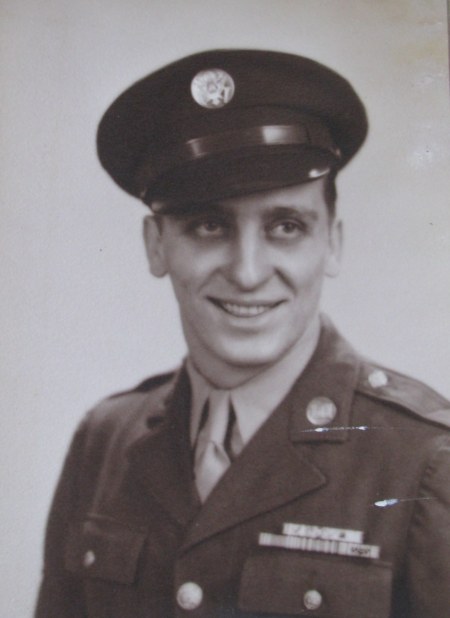
John Seelie was to box night Japanese attacked Pearl Harbor
John Seelie of Englewood, Fla. was supposed to box the day the Japanese attacked Pearl Harbor, Dec. 7, 1941. He was a champion welterweight who just joined the 25th Infantry Division stationed at Schofield Barracks outside of Honolulu, Hawaii.
Marine’s death hits home
Lance Cpl Brian Rory Buesing, killed in an ambush in the Iraqi desert, was buried in a north Florida fishing village as his Marine unit marched on downtown Baghdad half a world away.
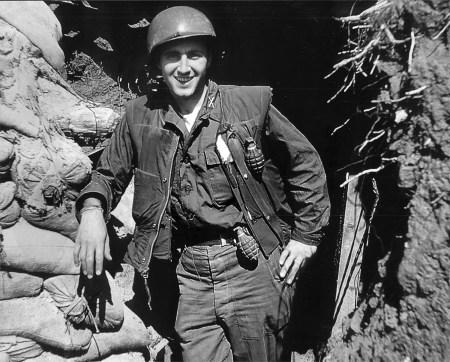
Battle of Pork Chop Hill
More than 50 years after the rifles fell silent and the cannon fire ceased in the hills north of the 38th Parallel dividing North and South Korea, no one who was there seems to know why both sides put so much stock in controlling Pork Chop Hill during the closing months of the Korean War.
He steered the Battleship Missouri into Tokyo Bay
The Battleship USS Missouri, flagship of Fleet Adm. William F. “Bull” Halsey’s Task Force 58, steamed into Tokyo Bay 150 ships-strong on the morning of Aug. 29, 1945. Quartermaster 3rd Class Ed Kalanta of Port Charlotte, Fla., was at the wheel of the 45,000 ton leviathan.

Behind enemy lines in Vietnam
John Rambo has nothing on Mark Bills. The Venice, Fla. dentist was once a member of an elite, secret Army Special Forces group dropped behind enemy lines during the Vietnam War.

First blood during Korean War
About Life’s cover shot “The first U.S. infantry outfit to shed blood in the Korean War was the 24th ‘Victory’ Division. Three of these men are shown aboard a jeep in Korea. Last week the men of the 24th fought heroically to hold the key city of Taejon against superior Communist forces. They were forced…

Airborne Ranger tells his Korean and Vietnam war tale
A Ranger Born tells the story of a man of arms. Col. Robert Black, a highly decorated Korean and Vietnam War soldier wrote a book about his military adventures.

His dad received the Medal of Honor at Iwo Jima
To everyone else, Sgt. William Harrell was a war hero. He was the recipient of the Medal of Honor, “…for conspicuous gallantry at the risk of his life above and beyond the call of duty” at Iwo Jima during World War II. To Gary Harrell he was just dad.
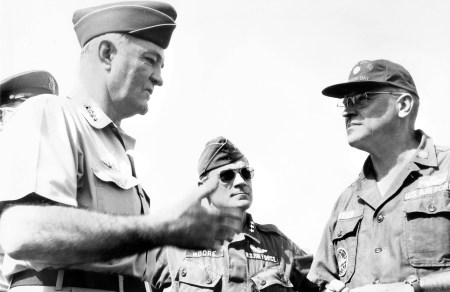
He helped CIA depose Diem regime
Lt. Col. John Dyer had no idea the planeload of .50-caliber machine-gun ammunition he flew to Tonsonnhute Airport in Saigon was part of a CIA plot to topple the Ngo Dinh Diem government in South Vietnam.
‘Black Lions’ faced death in Vietnam
The ”Black Lions” were looking for a fight. The battalion had been on a search-and-destroy mission for more than a week. Now the men of the 2nd Battalion, 28th Regiment, 1st Infantry Division were exhausted from chasing the Viet Cong through the jungle 50 miles north of Saigon.

Hank Abajian put radar on anti-aircraft guns in the field during WW II
Besides the 16 million service men and women who took part in World War II, there were also thousands of civilians on the front lines involved in fighting against the Germans and the Japanese, too.
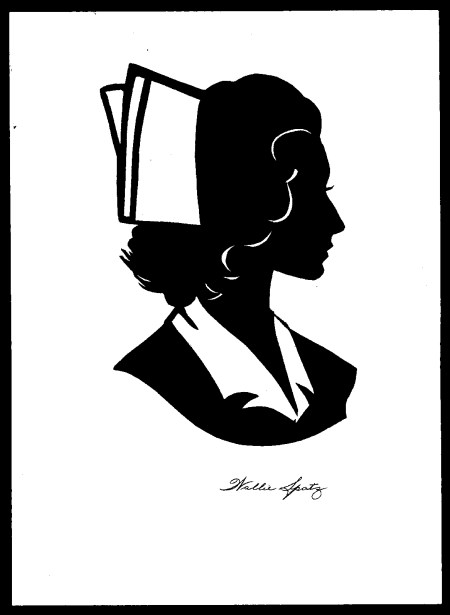
Wallie Spatz, the ‘Silhouette Queen’
Wallie Spatz captures incredibly delicate likenesses of people in intricate silhouette cutouts. She has made black and white paper silhouettes for more than 60 years of everyone from President Lyndon Johnson to thousands of servicemen during World War II.
One of ‘The Chosin Few’
Joe Quick is one of “The Chosin Few”. He’s one of the members of the 7th Regiment, 1st Marine Division that led the way up and back from the Chosin Reservoir during the early months of the Korean War. For nearly eight long weeks, Quick and 20,000 other U.S. Marines braved overwhelming enemy odds in…
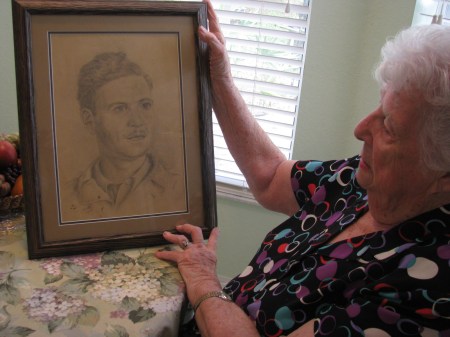
A penciled sketch is all she has of her first husband drawn by prisoner during WW II
A penciled drawing of a young man in Army garb is the most tangible remembrance she has of her first husband, 2nd Lt. Frank Burrows. Ruth Arnold of Heritage Oak Park in Port Charlotte had the drawing matted and framed to preserve it.

Dutch Underground rescued B-17 crew
Second Lt. Leonard Pogue knew he and the other eight members of his B-17 bomber crew were in for a bad day when they were informed of their target. For the second day in a row, the crew of “Straighten Up and Fly Right” was ordered, along with the rest of the 493rd Bomb Group,…
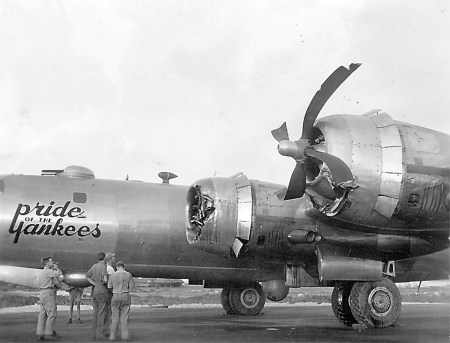
He flew first firebomb raid over Tokyo
It was March 9, 1945. Sgt. Bob Wallace was a radioman aboard “Pride of the Yankees,” a B-29 Superfortress flying lead bomber on the first firebomb raid over Tokyo during World War II.

He photographed sinking of carrier Yorktown
Bill Roy was a 21-year-old photographer’s mate aboard the aircraft carrier USS Yorktown when she was sunk by an enemy submarine at the Battle of Midway June 7, 1942.Midway was the defining battle in the Pacific Theater during the first six months of World War II. The United States went to war after its Pacific…
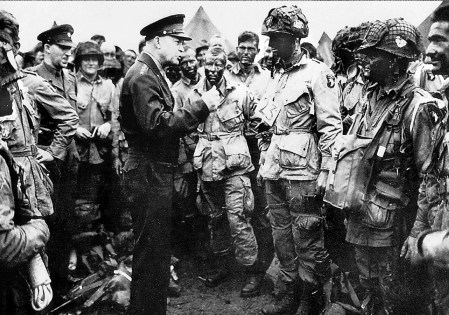
‘Screaming Eagle’ recalls D-Day Invasion and Normandy
Pfc. Robert Granche was a “Screaming Eagle” He served in the 101st Airborne Division that parachuted behind enemy lines in the dark on D-Day morning, June 6, 1944.

Col. Paul Tibbets dropped first Atomic Bomb on Aug. 6, 1945
Before he dropped the world’s first Atomic Bomb on Hiroshima in a B-29 Super Fortress named for his mother, “Enola Gay,” Lt. Col. Paul Tibbets flew a B-17 Flying Fortress over Adolf Hitler’s Third Reich.
Nimitz bet country at Midway
The god of war smiled on United States forces at Midway. “In 30 hours, at the Battle of Midway, the fate of World War II was changed in the Pacific,” according to commentary from newsreel footage taken at the time.
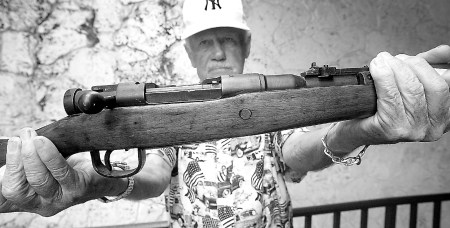
‘Jap had me in his sight’
Hal Ross of Port Charlotte, Fla. was trained as a member of the 10th Mountain Division in World War II, but ended up fighting the Japanese in the jungle islands of the South Pacific.
He attacked the Yamato, world’s biggest battleship
It was Ensign Woody Lindskog’s lucky day. The Navy pilot was plucked from Wasile Bay off Halmahera Island in the South Pacific by an Army Air Corps Catalina flying boat, right under the nose of a Japanese gun emplacement and thousands of enemy troops after his Hellcat fighter was hit by an antiaircraft flak and…
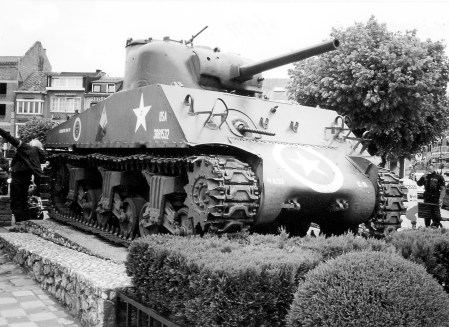
Fighting for Gen. George Patton at the Bulge
It was the day after Christmas 1944 when the 704th Tank Battalion, 4th Armored Division of Gen. George S. Patton’s 3rd Army broke through the German lines at Bastogne to rescue the 101st Airborne Division, dug in and holding back the enemy onslaught at the Battle of the Bulge.

Fox Company saved the day
Pvt. Hector Cafferata was a 20-year-old green Marine replacement. He joined Fox Company’s 2nd Platoon a few days before the first wave of Chinese troops attacked his listening post at the Toktong Pass during the early months of the Korean War that cold November night half a century ago.
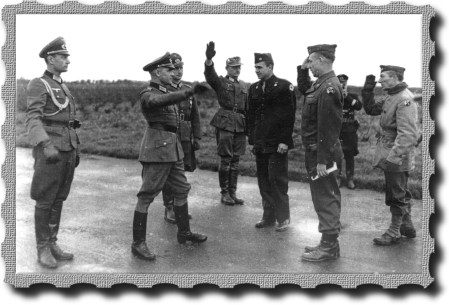
He helped capture Remagen Bridge over Rhine River
The red, white and black Nazi flag was in as good condition, swastika and all, as the day Mike Clemente pulled it off a flag pole that stood in a tiny public square in Remagen, Germany almost 60 years ago.

He fought “The Desert Fox” at Kasserine Pass
Sgt. Mike Sovan, a Sherman tank commander, and his men had just crossed the Nied River in France during World War II as part of Gen. George Patton’s 3rd Army when their third tank was shot out from under them.

He saw the gates of Hell
Irving Ross saw the “Gates of Hell.” He was among the first American soldiers to help liberate Dachau concentration camp in Germany at the end of World War II.
A ‘Guest’ of the Fuhrer
They were supposed to fly their final bombing mission, their 35th, over Cologne, Germany on Friday 13th, 1944. They didn’t do it. That was a big mistake.

Marine pilot became God’s man after WW II
Father Bill Magill of Venice, Fla. was a “Devil Dog.” He flew a Corsair, F-4U fighter, in the Pacific during World War II before he began working for the Lord.
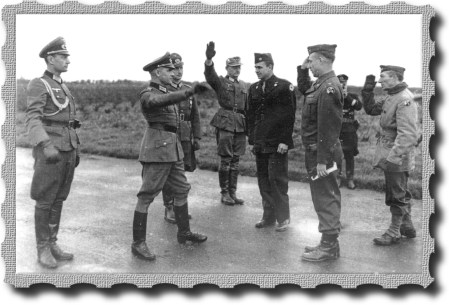
Jewish POW swapped by Germans in World War II
Harry Glixon couldn’t believe his ears when he answered the phone at his Sarasota, Fla. home one day in June 2001. He wasn’t expecting to become a war hero after 57 years. The old soldier had been a member of a 55-man combat patrol from the 94th Infantry Division captured by the Germans near Lorient,…
He fought Viet Cong in jungles of Vietnam
From the looks of him you’d never know Rufus Lazzell is a highly-decorated Airborne Ranger with two wars under his belt. He is a little guy with a matter-of-fact attitude who doesn’t spend much time talking about his military exploits in Korea or Vietnam decades ago.
Little known World War II surrender signed
Despite what you may have read in history books or seen on the History Channel, the Japanese at the close of World War II surrendered first on Ie Shima Island before surrendering to Gen. Douglas MacArthur aboard the battleship USS Missouri in Tokyo Bay.
He flew with Jimmy Stewart in WW II
“Jimmy Stewart was just one of the guys after we got to know him,” Jim Myers said. The Englewood, Fla. aviator flew with the movie star in a B-24 Liberator bomber during World War II.
 War Tales