From World War II

‘Sky Queen’ almost shot down by German 88s

This interview first appeared in the Charlotte Sun newspaper, Port Charlotte, Fla. on Sunday, March 5, 2006 and is republished with permission. Learning to fly a Stearman PT-17 “Kaydet” fabric-covered, two-seat biplane at Carlstrom Field in Arcadia, Fla. in 1943 was a far cry from piloting a B-26 “Marauder” twin-engine attack bomber against a heavily…

Typhoon was worst day of World War II for John Wisse

It wasn’t the bombing of the carrier USS Franklin off the coast of Japan on March 19, 1945, or the attack by 31 Kamikazes on the four destroyers leading the Franklin’s task force off Okinawa on April 14, 1945, that John Wisse of Rotonda, Fla. considers his worst day in World War II.

Jefferson Askew made 38 Atlantic convoy trips during WWII

Jefferson Askew joined the Navy at age 23 in 1940, almost a year before the Japanese bombed Pearl Harbor. By war’s end, he had made 38 trips across the Atlantic in a minuscule destroyer escort, the USS Amick, helping to protect 150-ship convoys making the hazardous voyage to Europe during World War II.

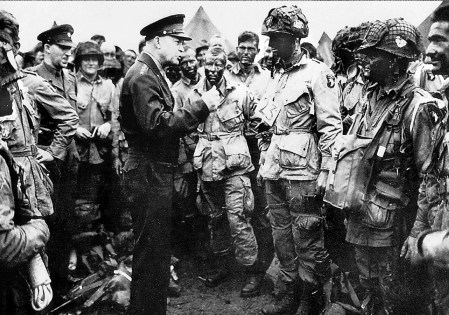
2nd Lt. Ted Weatherhead flew 101st Airborne to D-Day jump, June 6, 1944

Ted Weatherhead was a 21-year-old green 2nd lieutenant and co-pilot of a C-47, twin-engine, transport plane — a member of the 316th Troop Carrier Group, 44th Troop Carrier Wing, 9th Air Force — that dropped 19 fully-equipped 101st Airborne paratroopers behind enemy lines on D-Day hours before the June 6, 1944 Allied invasion of Normandy…

He was Dauntless dive bomber gunner in WWII

More than 60 years ago, former Sgt. Robert Martin of Englewood, Fla. was a back seat gunner in a Douglas Dauntless SBD single-engine dive bomber flying against Japanese fortifications on Bougainville in the New Georgia Islands in the Pacific during World War II. He was a member of Marine Dive Bomber Squadron 234.

1st. Lt. Bob Wachter flew last B-29 mission over Japan in WWII

1st Lt. Bob Wachter of Port Charlotte, Fla. was the navigator on a B-29 bomber called “Old Upper Cut” that flew on the last “Super Fortress” mission of World War II. When his squadron left Guam on Aug. 14, 1945, he didn’t know they would fly not only the last, but the longest bomber raid…

Julius Gervan was engine-room chief aboard destroyer Thatcher in WW II

Chief Julius Gervan of Burnt Store Isles subdivision south of Punta Gorda, Fla. was in charge of the forward engine-room aboard the destroyer USS Thatcher II (DD-514) when a kamikaze pilot crashed his plane into the the ship’s super structure and burst into flames killing 14 sailors and wounding 56 more during the Battle for…

George Hardy of Sarasota was a Tuskegee Airman in World War II

EDITOR’S NOTE: First of a two-part story. George Hardy of Sarasota, Fla. was a Tuskegee Airman. The retired lieutenant colonel began his military career as a member of the all-black 99th Fighter Squadron, flying 21 combat missions over Germany during the final two months before V-E Day in World War II in a P-51 “Mustang” fighter plane.

George Lentz was B-17 top turret gunner in 8th Air Force

George Lentz of Rotonda, Fla. was a staff sergeant in the 385th Bomb Group, 549th Bomb Squadron, 92nd Wing of the 8th Air Force in World War II. He flew 29 combat missions as an engineer and top turret gunner in a B-17 “Flying Fortress” at the end of the war from a base near…

Emerald Point resident helped build Atomic Bomb during WW II

A cadre of brilliant young scientists and an army of “hick girls” from the Oak Ridge, Tenn. area secretly processed uranium-235 used in the first atomic bomb dropped on Hiroshima at the close of World War II. Scores of FBI undercover agents watched almost every moved made by 100,000 atomic energy workers who reported to their jobs in a community that over night grew out of two farms, but wasn’t shown on any map during the Second World War.

Roy Kroesen fought with the 696th Field Artillery in WWII

Ninety-one-year-old former Sgt. Roy Kroesen of Rotonda commanded “The Priest,” a 105 mm, M-7 self-propelled Howitzer in World War II that looked a lot like a tank. He served with the 696th Armored Field Artillery Battalion, which came ashore at Pont-Scorff, France, on Aug. 7, 1944, and fought through France, Belgium and Germany, eventually meeting the Russian Army at the Elbe River near Berlin.

Nick Melone remembers how he captured Japanese flag

Nick Melone of Port Charlotte, Fla. sat in a big gray cushy chair, a tether running from his nose to a nearby oxygen bottle. He reached for a folded flag stuffed in the top of a blue plastic storage tub of World War II memorabilia. The 89-year-old Marine sergeant shook the folds out of the…

Sailor fought in 4 major Pacific battles during WWII

Earl Swillum went aboard an LST as a “90-Day Wonder” third officer and sailed into the war zone at the Battle for Saipan. Before the fighting in the Pacific was over he and the LSTH-121, which also served as a hospital ship, took part in three other major battles during World War II.

USS Arizona survivor Vernon Olsen remembered

Vernon Olsen, 91 — who survived the Japanese attack on Pearl Harbor aboard the battleship USS Arizona, swam away from the carrier USS Lexington as it was sinking during the Battle of the Coral Sea months later, and took part in the Bikini Atoll atomic bomb tests after the war — died Friday, April 22,…

He fought at Okinawa the last big battle in the Pacific

Right out of high school Clyde Leininger, who lives in Alligator Mobile Home Park south of Punta Gorda, Fla. joined the Naval Aviation Cadet Program to become a pilot. Before he got his wings the program was canceled in October 1944 because the Navy had too many pilots.

He took President Roosevelt to Malta to Attend the Conference at Yalta

Angelo Marinelli is the swabbie in the center.  He and his buddies had just dropped FDR off at Malta and were touring the island on a sunny Sunday. President Roosevelt met with Egyptian King Farouk  aboard the USS Quincy in July 1944. Photo provided Boatswain’s mate Angelo Marinelli knew something big was up when a bathtub was brought aboard his ship, the heavy cruiser USS Quincy, in December 1944 while it was moored at the Boston Navy  Yard.

Old Soldier went back for her

  A VFW chaplain said a few words, two soldiers in dress uniforms folded an American flag into a precise triangle and handed it gently to the widow, a rifle squad fired three volleys and Taps was played as 50 mourners bowed their heads.

Sgt. Harold Glover fought at Salerno, Anzio, Monte Cassino, France & Germany during WW II

Harold Glover of La Casa mobile home park in North Port, Fla. was a sergeant in the “Fighting 36th Infantry Division” that first saw battle in North Africa in World War II, went on to Italy and before the war was over made the invasion of Southern France and marched into Germany. He received three Purple Hearts while fighting at Salerno, Anzio, Monte Casino and finally crossed the Rhine River into Germany at war’s end.

Ensign Jim McKinney forced Soviet sub to surface with water hose in Sea of Japan

Jim McKinney is a Navy man. So was his father and so is his son. Jim was a career naval officer who served during the Cold War as a commodore of a squadron of hydrofoil boats in Key West equipped with Harpoon, ship-to-ship guided missiles. His father, Adm. Eugene McKinney, was skipper of two World War II submarines: the USS Salmon and the USS Skate. He received three Navy Crosses and a Silver Star for Valor for the combat missions he made. Brad, Jim’s oldest son, is the commander of the Explosive Ordinance Department at the Navy’s facility at Panama Beach.

1St. Sgt. Jim Tankersley of Brookside Bluff fought with Patton, Bradley in Europe

1st Sgt. Jim Tankersley, who lives in Brookside Bluff Condominium Park north of Arcadia, Fla. was in charge of ground communications for the 95th Infantry Division’s artillery battalion. He and a squad of 25 soldiers laid and maintained the phone cables connecting division headquarters with front line troops during some of the major battles in Europe in World War II.

USS Torsk, only sub to sink train in World War II

Don Lichty of Lemon Bay Isles mobile home park in Englewood was a torpedoman aboard the USS Torsk in World War II. Her claim to fame was she was the only submarine in the U.S. Navy to sink a train. She also sent the last two Japanese ships to bottom hours before the end of the Second World War.

2nd Lt. Carl Citron flew 33 missions in 8th Air Force

2nd Lt. Carl Citron hadn’t been in England but a few weeks when his unit, the 466th Bomb Group, 786 Squadron, of the 8th Air Force, was assigned to a low-level bombing mission in their B-24 Liberators against the German submarine pens at Brest along the coast of Nazi-occupied France.

‘Doc’ Schaeferle of La Casa survived Omaha Beach on D-Day

The citation accompanying his Bronze Star Medal reads: “LAWRENCE G. SCHAEFERLE, CAPTAIN, Medical Detachment, 32nd Field Artillery Battalion. For heroic achievement in connection with military operations against the enemy in the vicinity of St. Laurent-sur-Mer, Normandy, France, 6 June, 1944. Although subjected to heavy enemy fire, Capt. Schaeferle remained on exposed beach, administering first aid and assisting in evacuation of the seriously wounded. His heroic devotion to duty saved many lives. Entitled to wear six bronze battle participation stars on European Theatre Ribbon for campaigns in Sicily, Normandy, Northern France, Rhineland, Ardennes, and Central Europe. Awarded the Bronze Star Medal…

Col. Carl Citron takes last flight on WW II B-24 bomber

Col. Carl Citron (Ret.) took a sentimental journey last Thursday morning at Venice , Fla. Municipal Airport on a B-24 “Liberator” bomber like the one he piloted a lifetime ago on 33 combat missions over Nazi occupied Europe in World War II. He was in ecstasy during the 30 minute flight down memory lane as the four-engine heavy bomber circled Venice a 1,000 feet below.

Ed Bremen wounded on Saipan in WW II fighting with 4th Marine Division

Ed Bremen was a Marine sharpshooter in Company F, 2nd Battalion, 24th Regiment, 4th Marine Division. He became a Browning Automatic Weapon man who saw action in the Pacific on Roi and Namur islands near Kwajalein Atoll in February 1944 and Saipan in the Mariana Island chain in June, 1944. He was wounded there and spent the next 16 months recuperating in a trio of hospitals throughout the country.

Second teak box from USS Arizona’s deck shows up in Port Charlotte

For as long as Kathy Vanden Bosch of Port Charlotte can remember, the little teak wood box has been a prized possession. What made it really special is it sat on her father’s dresser until he died. She was told as a child, it was made from the deck of the battleship USS Arizona by her uncle when he was in the service at Pearl Harbor during World War II.

Marine turned part of USS Arizona’s teak deck into jewelry box

John Henry Thomas was a Marine who served in the Pacific during World War II, but never fired a shot in battle. He was a carpenter before the war who worked in the woodworking shop at the Marine Corps barracks in Pearl Harbor almost a year after the Japanese bombed the Pacific Fleet at Pearl dragging the United States into war.

He landed at Utah Beach on D-Day in his M-7 self-propelled gun

Ed Kent was the gunner on an M-7, self-propelled 105 millimeter Howitzer, who landed June 6, 1944 at Utah Beach on D-Day in Normandy, France during World War II. The 20-year-old corporal survived 15 days before being seriously injured by shrapnel from incoming enemy fire, was sent back to England and eventually the States to recuperate.

Sgt. Willard Chamberlin with 1st Marine Division at Okinawa during WW II

Willard Chamberlin was a Marine mess sergeant and rifleman who saw action at Okinawa, the biggest battle in the Pacific during the closing days of World War II. He quit high school in 1943, when he was just 17-year-old, and joined the Marines with his parents’ permission. Before the war was over he had three brothers who also served in the Army, Navy and Air Corps.

Assault on Assoro

The ancient hill town in central Sicily is topped by the ruins of King Robert II of Normandy’s 12th Century castle.   It’s been a stronghold of armies and warlords since 1000 B.C.   In July 1943 the village, the castle and the hill with its 1,100-foot cliff was held by the German’s elite Herman Goering Division during the Allied Sicilian Campaign in World War II.

Soldier tells about looting Hitler’s Eagle’s Nest in his own words

Fred Butts, a Cape Cod industrialist who wintered in Boca Grande, Florida, was thought to be the first American soldier to loot Adolf Hitler’s Eagle’s Nest retreat high atop Kehlstein Mountain in the Bavarian Alps near Berchtesgaden at the close of World War II. Sixty years later, shortly before his death, he told his family…

274th Field Artillery Battalion was part of Patton’s 3rd Army in WW II

Ralph Coffin fought all across Europe during World War II with the 274th Armored Artillery Battalion, part of Gen. George S. Patton’s 3rd Army. He landed in Normandy on Aug. 19, 1944 at St. Mere L’Eglise and fought from there to Avaranches and on to the Muese River by Sept. 1 and then to the famed fort at Verdun held by the Germans.

WW II for Hank Chiminello was short and sweet

World War II for Hank Chiminello only lasted four months. He ended up in Honolulu as a radioman aboard a troop transport ship in April 1945. “We were taking boys and supplies over to the islands on a 426-foot ship, the USS Medean (AKA-31),” the 88-year-old North Port resident explained. “We were sent to all the islands over there – the Philippines, Guam, Saipan, Iwo Jima and Okinawa.”

Dave Schmidt joined Navy at 15 and took FDR to Yalta aboard Quincy

Dave Schmidt joined the Navy at 15, before World War II. He was a big boy for his age – 5-ft., 6-inches tall and 215-pounds. “I was an out of control kid. My parents both worked and they decided the Navy was the best thing to straighten me out. They told the Navy recruiter my birth certificate was lost in a fire and I was 17-years-old,” the 86-year-old Port Charlotte man recalled almost seven decades later.

Al Gosselin was radioman who served aboard freighters in WW II

At 90 Al Gosselin of Big Tree mobile home park in Arcadia, Fla. no longer remembers all the details of the 10 trips he made across the Atlantic and Pacific as a radioman aboard six freighters and one landing craft he served on during World War II. But there are instances aboard ship he still recalls as clear as a bell.

He served aboard USS Harding at Normandy and Okinawa in WW II

Mike Stata was a “hot shell man” on a 5-inch gun aboard the destroyer USS Harding 1500 yards off Omaha Beach on June 6, 1944 during the Normandy Invasion. He also served aboard the Harding off Okinawa on April 16, 1945 when his ship was hit by a kamikaze and 22 sailors aboard the destroyer were killed.

John Arens served in the Merchant Marines, Rangers and Navy

John Arens served as a teenage Merchant Mariner in World War II, become an Airborne Ranger in the Korean War, graduated from diving school in the 1960s, spent 11 years as a Navy SCUBA diver in the Arctic before skippering a Navy spy ship during the Cold War and completed his 40-year military career as the captain of a fast transport ship during “Operation Desert Storm” in 1991.

Sgt. Ed Erving drove an ambulance in 5th Armored Division during WW II

He landed on Utah Beach on D-Day plus 6, took part in the breakout at St. Lo, the Battle of the Bulge, Hürtgen Forest, Remagen and stopped at the Elbe River near Berlin at war’s end. Edwin Erving of Port Charlotte, Fla. was trained as an ambulance driver and medic attached to the 5th Armored Division in World War II. He landed at Utah Beach in Normandy, France on D-Day plus 6 with the 5th Armored.

WW II Navajo Code Talker visits area, talks to several local groups

Bill Toledo, a Navajo Code Talker with the 3rd Marine Division in World War II, was in the area talking to several organizations and school groups, along with Frank Willetton, another Navajo who fought with the 2nd Marine Division at Okinawa. The Rotary Club of Englewood, Fla. brought them to town to speak at their 7 a.m. weekly meeting Thursday, March 25, 2010.  While here they also talked to the general public at a two hour session held at Lemon Bay High School in Englewood on Thursday evening. A full house of 1st Marine Division Assn. member listened to the…

Ken Schank was way below deck when 3 torpedoes hit his cruiser USS Helena

A spread of three “Long Lance” Japanese torpedoes struck the light cruiser USS Helena at 2 a.m., July 6, 1943 off Vella Lavella Island, part of the Solomon Island Chain in the South Pacific. Machinist Mate Ken Schank of Port Charlotte was at his battle station maintaining an electric generator controlling the cruiser’s main guns in the bowels of the ship deep below the surface when disaster struck.

Naval aviator Al Boyd flew off USS Ranger (CV-4) before WWII

After graduating in 1936 from Naval Aviation in Pensacola as an ensign, Capt. Al Boyd’s first assignment aboard the Battleship Tennessee was as a catapult pilot flying a pontoon spotter plane. Twenty –five years later, as a captain commanding a Navy base out west, he flew an F-4 “Phantom II” jet fighter-bomber faster than Mach-2…

He flew POWs out of Hanoi at end of Vietnam War

Second Lt. Russell Ogan was returning from a fighter sweep over the Battle of the Bulge flying low and slow because of the weather, in “Gloria May,” his P-47 “Thunderbolt,” when his fighter took a direct hit from enemy ground fire.

He steered the Battleship Missouri into Tokyo Bay

The Battleship USS Missouri, flagship of Fleet Adm. William F. “Bull” Halsey’s Task Force 58, steamed into Tokyo Bay 150 ships-strong on the morning of Aug. 29, 1945. Quartermaster 3rd Class Ed Kalanta of Port Charlotte, Fla., was at the wheel of the 45,000 ton leviathan.

His dad received the Medal of Honor at Iwo Jima

To everyone else, Sgt. William Harrell was a war hero. He was the recipient of the Medal of Honor, “…for conspicuous gallantry at the risk of his life above and beyond the call of duty” at Iwo Jima during World War II. To Gary Harrell he was just dad.

He helped CIA depose Diem regime

Lt. Col. John Dyer had no idea the planeload of .50-caliber machine-gun ammunition he flew to Tonsonnhute Airport in Saigon was part of a CIA plot to topple the Ngo Dinh Diem government in South Vietnam.

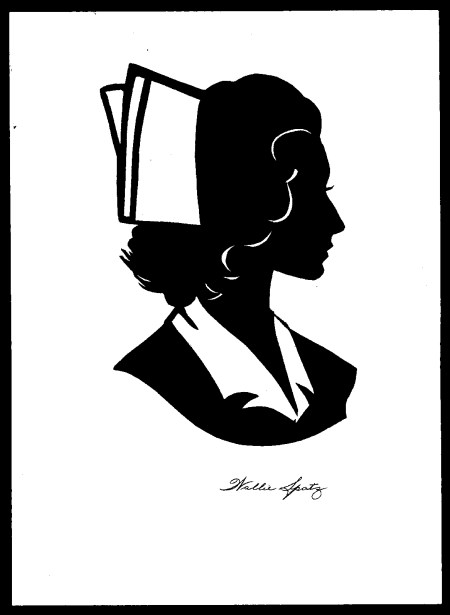
Wallie Spatz, the ‘Silhouette Queen’

Wallie Spatz captures incredibly delicate likenesses of people in intricate silhouette cutouts. She has made black and white paper silhouettes for more than 60 years of everyone from President Lyndon Johnson to thousands of servicemen during World War II.

One of ‘The Chosin Few’

Joe Quick is one of “The Chosin Few”. He’s one of the members of the 7th Regiment, 1st Marine Division that led the way up and back from the Chosin Reservoir during the early months of the Korean War. For nearly eight long weeks, Quick and 20,000 other U.S. Marines braved overwhelming enemy odds in…

Dutch Underground rescued B-17 crew

Second Lt. Leonard Pogue knew he and the other eight members of his B-17 bomber crew were in for a bad day when they were informed of their target. For the second day in a row, the crew of “Straighten Up and Fly Right” was ordered, along with the rest of the 493rd Bomb Group,…

He photographed sinking of carrier Yorktown

Bill Roy was a 21-year-old photographer’s mate aboard the aircraft carrier USS Yorktown when she was sunk by an enemy submarine at the Battle of Midway June 7, 1942.Midway was the defining battle in the Pacific Theater during the first six months of World War II. The United States went to war after its Pacific…

Nimitz bet country at Midway

The god of war smiled on United States forces at Midway. “In 30 hours, at the Battle of Midway, the fate of World War II was changed in the Pacific,” according to commentary from newsreel footage taken at the time.

‘Jap had me in his sight’

Hal Ross of Port Charlotte, Fla. was trained as a member of the 10th Mountain Division in World War II, but ended up fighting the Japanese in the jungle islands of the South Pacific.

He attacked the Yamato, world’s biggest battleship

It was Ensign Woody Lindskog’s lucky day. The Navy pilot was plucked from Wasile Bay off Halmahera Island in the South Pacific by an Army Air Corps Catalina flying boat, right under the nose of a Japanese gun emplacement and thousands of enemy troops after his Hellcat fighter was hit by an antiaircraft flak and…

Fighting for Gen. George Patton at the Bulge

It was the day after Christmas 1944 when the 704th Tank Battalion, 4th Armored Division of Gen. George S. Patton’s 3rd Army broke through the German lines at Bastogne to rescue the 101st Airborne Division, dug in and holding back the enemy onslaught at the Battle of the Bulge.

He saw the gates of Hell

Irving Ross saw the “Gates of Hell.” He was among the first American soldiers to help liberate Dachau concentration camp in Germany at the end of World War II.

A ‘Guest’ of the Fuhrer

They were supposed to fly their final bombing mission, their 35th, over Cologne, Germany on Friday 13th, 1944. They didn’t do it. That was a big mistake.

Jewish POW swapped by Germans in World War II

Harry Glixon couldn’t believe his ears when he answered the phone at his Sarasota, Fla. home one day in June 2001. He wasn’t expecting to become a war hero after 57 years. The old soldier had been a member of a 55-man combat patrol from the 94th Infantry Division captured by the Germans near Lorient,…

Little known World War II surrender signed

Despite what you may have read in history books or seen on the History Channel, the Japanese at the close of World War II surrendered first on Ie Shima Island before surrendering to Gen. Douglas MacArthur aboard the battleship USS Missouri in Tokyo Bay.

He flew with Jimmy Stewart in WW II

“Jimmy Stewart was just one of the guys after we got to know him,” Jim Myers said.  The Englewood, Fla. aviator flew with the movie star in a B-24 Liberator bomber during World War II.

Anne Frank was his babysitter

As a child Pieter Kohnstam of Venice, Fla. grew up in Amsterdam, Netherlands during the late 1930s and early ‘40s. His family lived in an apartment house at 17 Merweideplein St. in a lovely section of the city’s south side.

Kamikazes rained down at Okinawa

Like a Biblical plague of locusts, the kamikazes swept across the Allied fleet in the Southwest Pacific during the closing months of World War II. The Japanese called them the “Divine Wind.” The sailors in Adm. “Bull” Halsey’s Task Force 38 called them “hell.”

He sunk biggest battleship of all

The Yamato was the largest battleship ever built. She had bigger guns and heavier armament than any ship afloat. Despite her size and fire power, the mightily leviathan’s hours were numbered as she and her small battle group steamed toward Okinawa on April 7, 1945.

Harold Tayler – Marine at Okinawa

Okinawa was the end of the line in the Pacific for the Japanese Imperial Army. The island invasion included 548,000 Allied forces and 1,200 ships. The initial assault force totaled 182,000 men – 75,000 more than landed on the beaches of Normandy on D-Day, a year earlier. They were facing 100,000 entrenched Japanese.

Harry Long was a POW with Patton’s son-in-law

It was his baptism of fire. Ten days before, in early August 1944, 2nd Lt. Harry Long, a member of the Medical Administration Corps of the 318th Infantry Regiment, 80th Division landed on Utah Beach in Normandy, France as part of Gen. George S. Patton’s 3rd Army.

Last of the 7 Bailey Brothers was Tuskegee Airman

Lt. Charles Bailey, Sr. was the last of the line. He was the last of Punta Gorda, Fla.’s “Fighting Bailey Brothers.” The last of a family of seven sons and two daughters who distinguished themselves in war and in life during World War II, Korea and much of the 20th Century.